About VariantLabel Fieldbook
A dedicated design manual detailing typography rules, contour protections, and batch alignment protocols for physical label collections.
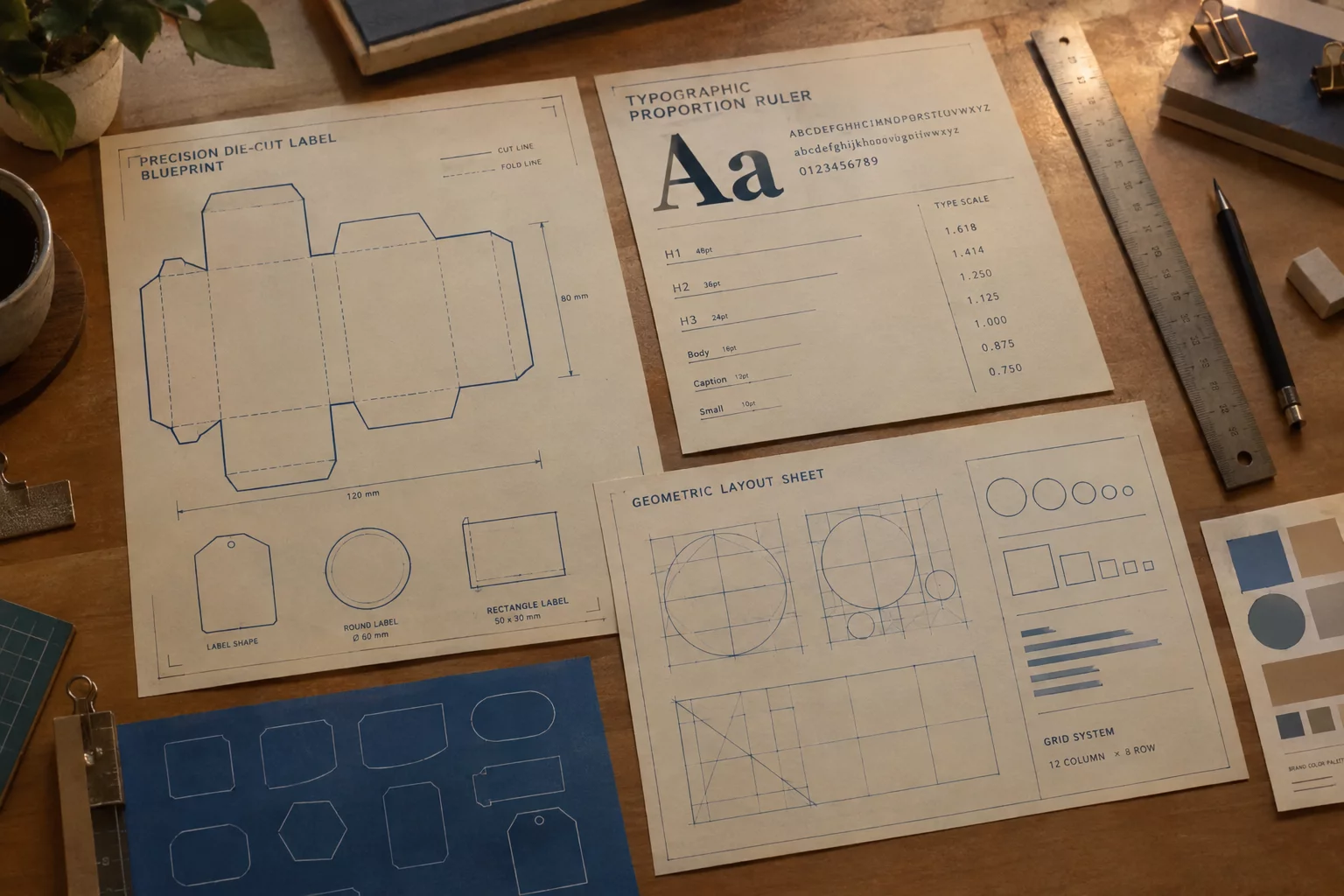
When batches of identical cut-out shapes carry fluctuating label texts, standard graphic templates collapse. The Fieldbook documents tested geometric tolerances and type-bounding rules for uniform output.
Standard vector documents function well for static designs, but physical crafting workflows stumble the moment item names shift from four letters to thirty-two. Without predetermined bounding enclosures and baseline anchors, artisans and small workshops waste materials on skewed margins, unreadable scale-downs, and uneven kerning.
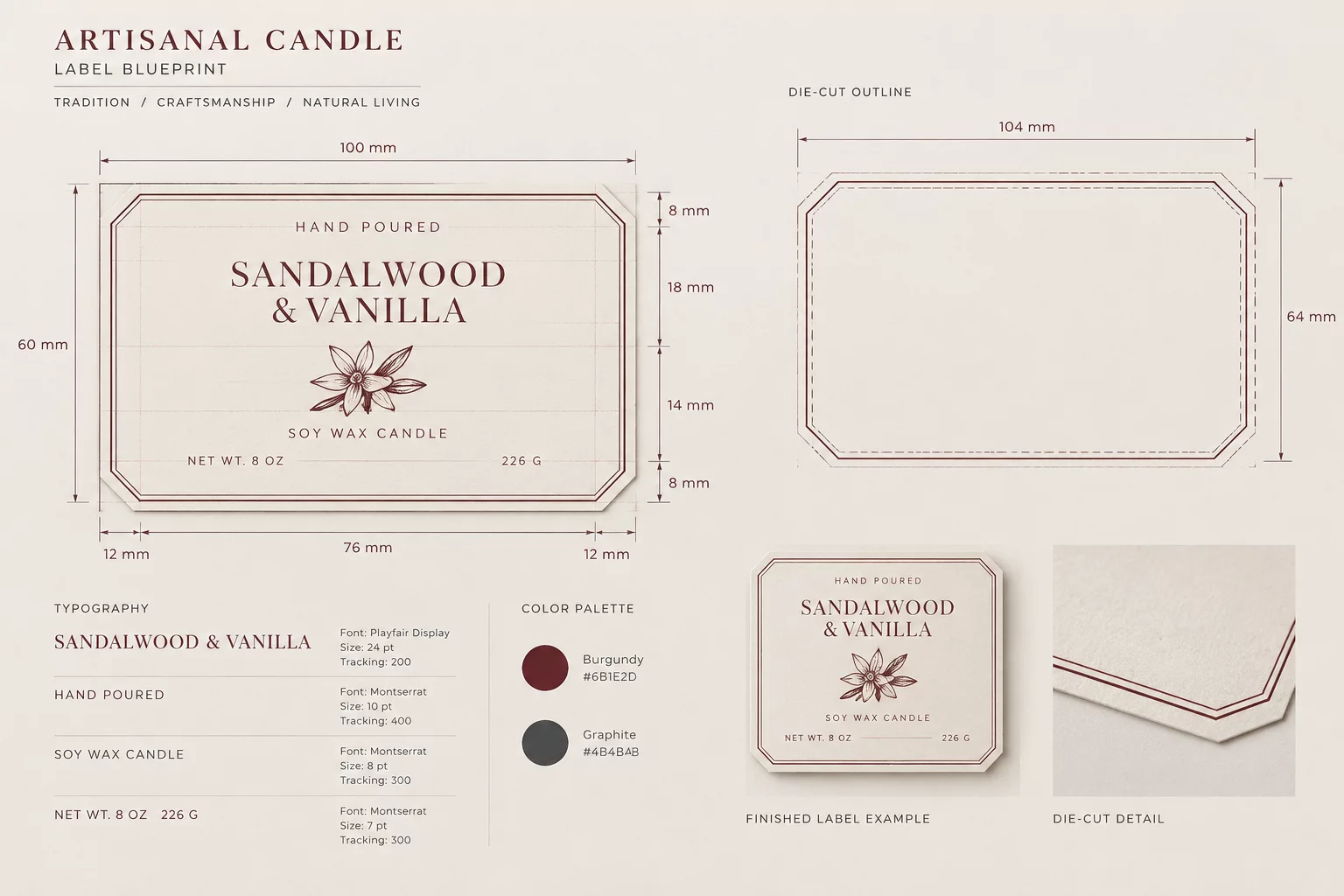
This reference manual organizes production protocols tested on cutter plotters, flatbed printing tables, and rotary die cuts. By standardizing font families, optical line centers, and proportional padding, multi-item batches retain a cohesive hand-crafted identity without manual re-centering per unit.
Maintain contour margins, corner radii integrity, and visual optical weight regardless of label orientation or trim cut offsets.
Establish discrete font scale tiers and line height locks instead of arbitrary non-uniform font shrinking for complex nameplates.
Verification techniques, registration checkpoints, and test-cut protocols to detect alignment drifts before printing full runs.
Toggle specific design scenarios to inspect target solutions implemented across our project documentation.
Guest favor tags, spice jars, and catalog bins feature phrases spanning single-digit syllables to multi-word descriptors. Our case series demonstrates step-down formulas that prevent uneven line breaks.
Cap text reduction at 75% of baseline size. If length demands further reduction, split automatically into symmetrical stacked lines.
Learn how to leverage internal offset margins, cut contour preservation, and nesting arrays inside popular desktop cutting environments to minimize toolhead displacement.
Recommended bleed tolerance: 1.25 mm outside final perimeter cutline to offset sheet feed variance.
Read answers regarding adhesive paper choices, optical alignment verification methods, and dealing with asymmetrical label perimeter forms.
Direct inquiries regarding missing case profiles can be filed through our contact desk.
We regularly assess real-world artisan projects, die-cutting setups, and packaging systems to expand our field instructions. Connect with our editorial desk to propose new profile experiments.