Repeated Shapes / Guide 03
Grid Margin Retention
Maintaining predictable boundary paddings and safe zones across die-cut label batches when variable data lengths threaten layout integrity.
Maintaining predictable boundary paddings and safe zones across die-cut label batches when variable data lengths threaten layout integrity.
When a series of labels shares a uniform perimeter die line, dynamic names of contrasting syllable counts exert uneven pressure on inner margins. Grid margin retention establishes permanent boundary offsets that protect typography from die drift and edge collision without compromising label balance.
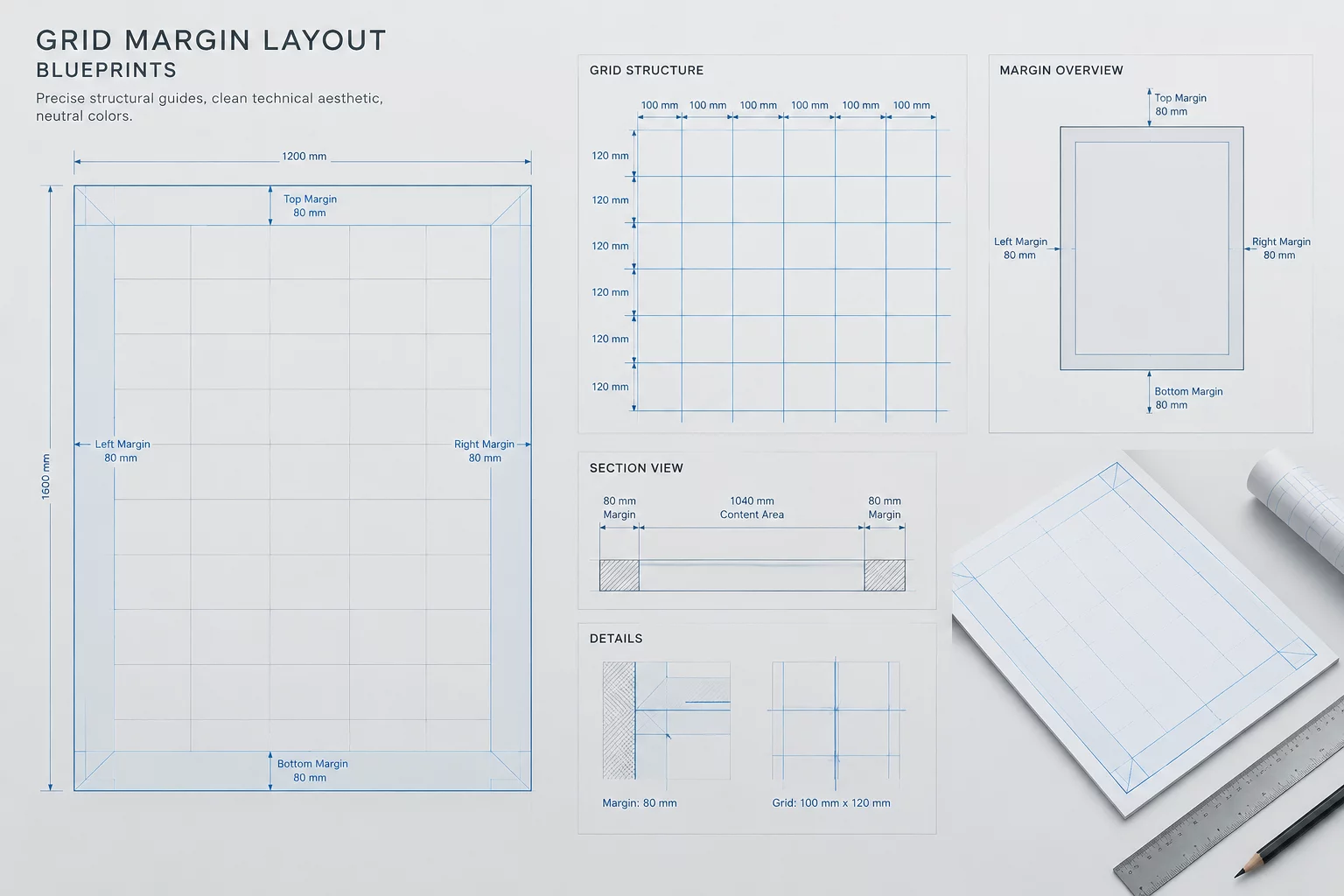
Download the complete perimeter alignment spec sheets to eliminate cutting discrepancies across varied label orders.
In multi-name production sheets, the outer cut contour remains identical while text elements fluctuate between concise monosyllables and extended hyphenated patronymics. Designers often make the error of floating margins dynamically, letting long words stretch uncomfortably close to the cut edge while leaving short names swimming in excess whitespace. Grid margin retention resolves this tension by locking an unyielding perimeter buffer into the primary template, guaranteeing that no glyph crosses the threshold regardless of character expansion.
A locked margin zone functions as a visual shock absorber. When labels sit grouped together in packaging trays or retail displays, the human eye reads the uniformity of boundary whitespace before decoding individual letterforms. Retaining identical top, bottom, and side clearances ensures that the family identity remains unbroken across thirty distinct personalized variants.
Production equipment introduces physical movement known as die drift. Roll-fed digital cutters and mechanical die stampers operate within mechanical variance thresholds, usually fluctuating between 0.3 mm and 0.6 mm during continuous runs. If typography touches the boundary limit, minute mechanical shifts cause letter stems to clip or visually scrape against the substrate contour.
Maintaining these clearance thresholds allows mechanical cutting tolerances to absorb natural feeder drift without impacting the perceived balance of the final peeled label.
During pre-flight checks, inspect each variant against the master margin overlay rather than evaluating individual labels in isolation. If an outlier name pushes against the boundary barrier, resolve the overflow through proportional tracking compression or structured optical font size scaling rather than expanding the bounding box. Consistent discipline across inner clearances transforms disparate personalized items into a cohesive, professional collection.